
Windows - Double Hung

Double-Hung Windows: Versatility & Easy Care
Maximum Ventilation and Convenience Double-hung windows are the ultimate choice for homeowners who prioritize airflow and easy cleaning. Their traditional design fits perfectly with any architectural style while offering modern functionality.
Key Features:
- Dual Operation: Both the top and bottom sashes move vertically. This allows you to open the top for ventilation while keeping the bottom closed for safety.
- Easy-Clean Design: Most modern double-hung windows feature tilt-in sashes, allowing you to clean both the interior and exterior glass from inside your home—no ladders required!
- Optimal Airflow: By opening both sashes halfway, you create a natural convection effect: cool air comes in through the bottom while warm air escapes through the top.
- Space-Saving: Since they slide vertically rather than swinging outward, they are perfect for walkways, patios, or areas with limited exterior space.
- Advanced Locking System: Equipped with dual-locking points for maximum security and a weather-tight seal that reduces noise and energy costs.
Expert Installation & Repair Whether you need a balance spring repair or a full glass replacement, Glass Services Pro has you covered.
Understanding the Parts of a Double-Hung Window
Introduction
Double-hung windows are one of the most popular window styles used in residential homes. Their design allows both the top and bottom sashes to move vertically, providing better airflow and easier cleaning.
To properly maintain or repair this type of window, it's important to understand the key components that allow it to operate smoothly. Each part plays a specific role in keeping the window balanced, secure, and energy efficient.
This guide explains the essential parts of a double-hung window and how they work together.
Main Components of a Double-Hung Window
1. Window Frame
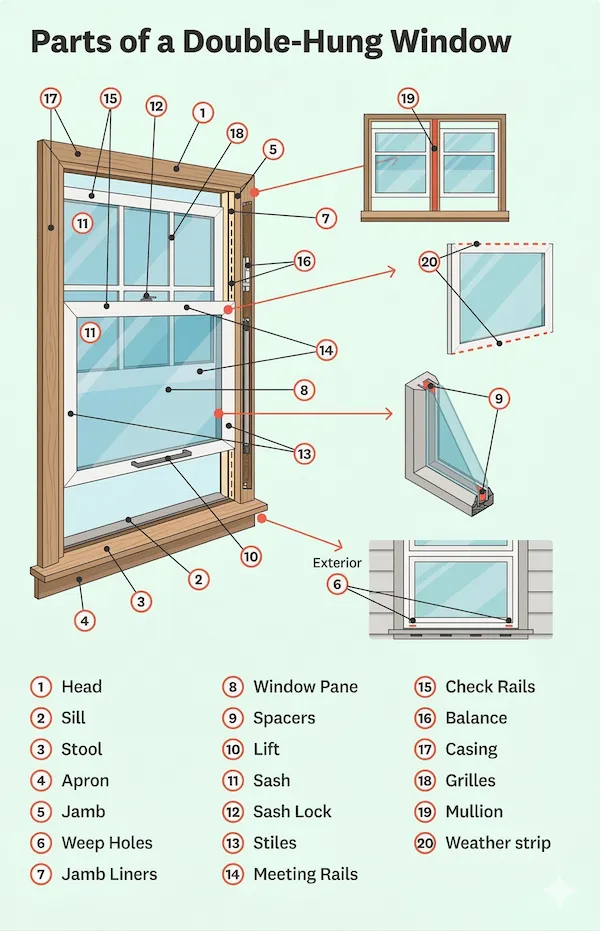
The frame is the outer structure that holds the entire window system in place. It connects the window to the wall opening and supports the moving parts.
The frame consists of three primary sections:
- Head – the horizontal top section of the frame
- Side Jambs – the vertical sides where the sashes slide up and down
- Sill – the bottom horizontal section that directs water away from the window
A properly installed frame helps ensure smooth window operation and proper sealing against air and water infiltration.
2. Upper and Lower Sashes
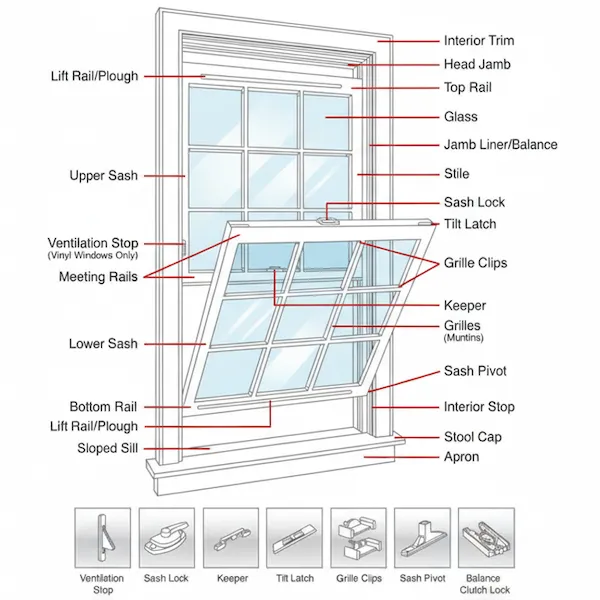
A double-hung window contains two movable panels called sashes.
- Upper sash – the top sliding section of the window
- Lower sash – the bottom sliding section that is most commonly used for ventilation
Because both sashes move independently, homeowners can control airflow more effectively compared to other window styles.